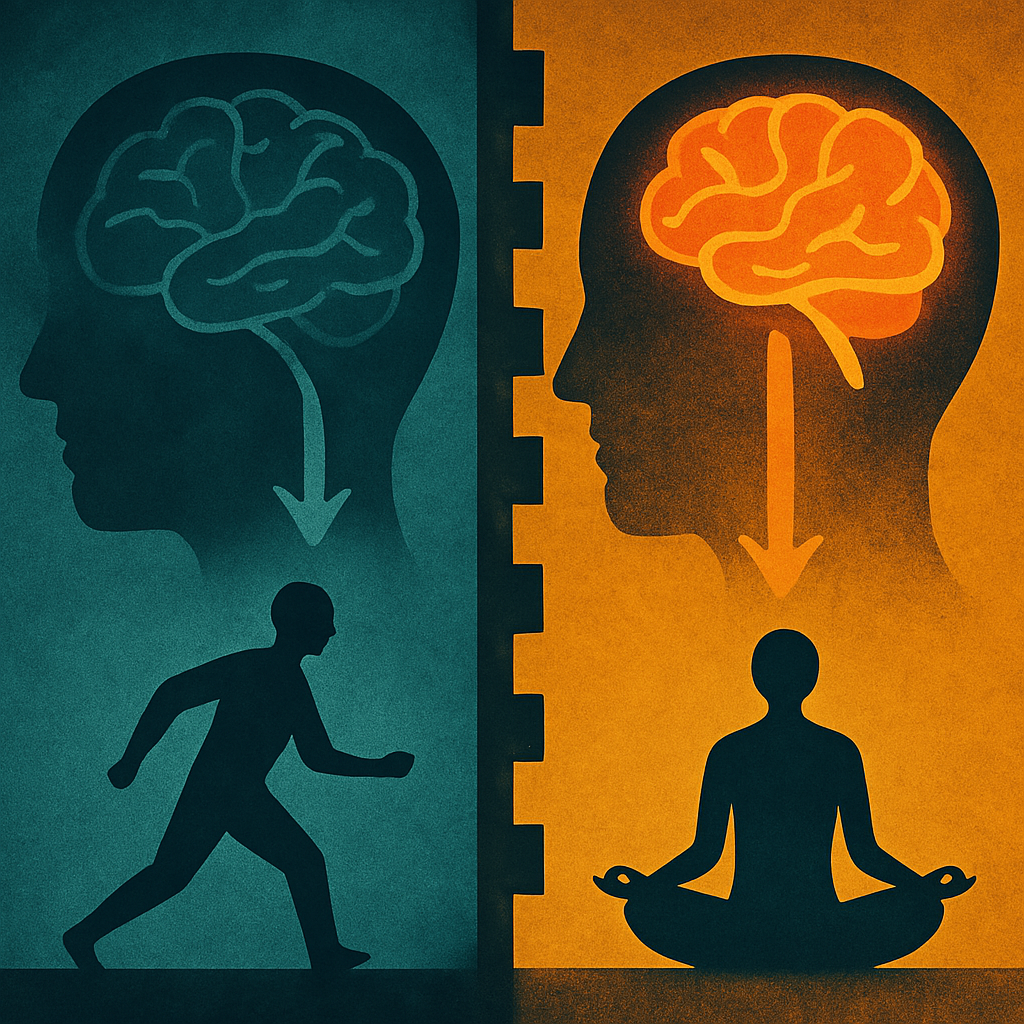
It’s estimated that 95% of our behavior runs on autopilot. This is because neural networks underlie all of our habits, reducing our millions of sensory inputs per second into manageable shortcuts so we can function in this complex world. These default brain signals are so efficient that they often cause us to relapse into old behaviors before we remember what we meant to do instead.
Mindfulness is the exact opposite of these default processes. It’s about executive control rather than autopilot, enabling intentional actions, willpower, and decisions. However, this takes practice. The more we activate the intentional brain, the stronger it gets. Every time we do something deliberate and new, we stimulate neuroplasticity, activating our grey matter, which is full of newly sprouted neurons that have not yet been groomed for “autopilot” brain.
But here’s the problem: while our intentional brain knows what is best for us, our autopilot brain causes us to shortcut our way through life. So how can we trigger ourselves to be mindful when we need it most? This is where the notion of “behavior design” comes in. It’s a way to put your intentional brain in the driver’s seat. There are two ways to do that—first, by slowing down the autopilot brain by putting obstacles in its way, and second, by removing obstacles in the path of the intentional brain, so it can gain control.
Shifting the balance to give your intentional brain more power takes some work, though. To create new patterns, you could try a series of “If this, then that” messages to create easy reminders to shift into the intentional brain. For instance, you might come up with, “If office door, then deep breath,” as a way to shift into mindfulness as you are about to start your workday. Or, “If phone rings, take a breath before answering.” Each intentional action to shift into mindfulness will strengthen your intentional brain.
Additionally, consider incorporating mindfulness practices into your daily routine. This could include:
- Mindful breathing exercises: Take a few minutes each day to focus on your breath, noticing the inhale and exhale without trying to change it.
- Body scan meditation: Spend time paying attention to different parts of your body, starting from your toes and moving up to your head, noticing any sensations without judgment.
- Mindful walking: Take a walk and focus on the sensations of your feet touching the ground, the movement of your legs, and the sights and sounds around you.
By consistently practicing these techniques, you can gradually shift the balance, giving your intentional brain more power and reducing the influence of your autopilot brain.
 In The Moment